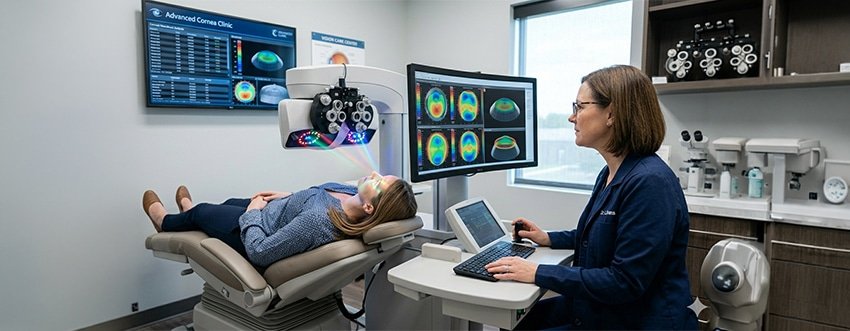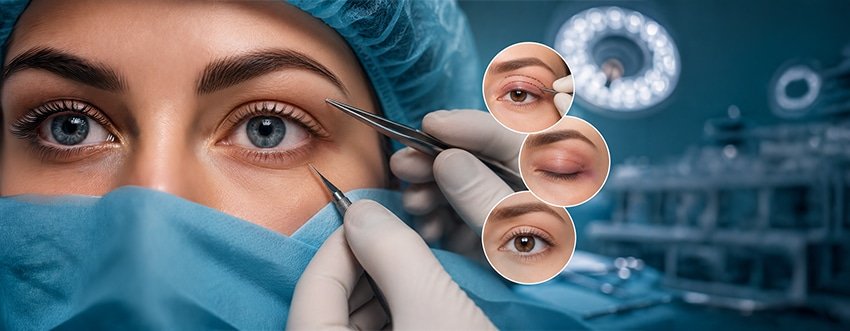


When Vision Blurs,
We’re Here With Clarity
Life moves through the eyes first. The faces we recognise. The roads we travel every day. The moments we never want to miss.
And when vision begins to change, even slightly, life can suddenly feel uncertain. That is why at Drushti Eye And Retina Centre, every patient journey begins with understanding. Backed by advanced technology, precise diagnosis, and compassionate expertise, every treatment is designed with one purpose which is to help you protect the gift of clear vision for the life ahead.
Retina
Cataract
Cornea
Oculoplasty
Ocular Oncology
Comprehensive Eye Checkup
Glaucoma
Uveitis
Neuro-Ophthalmology
Common Eye Conditions
Systemic Diseases Affecting The Eye
Drug-Induced Eye Disorders
Refractive Errors
Retina
Retina
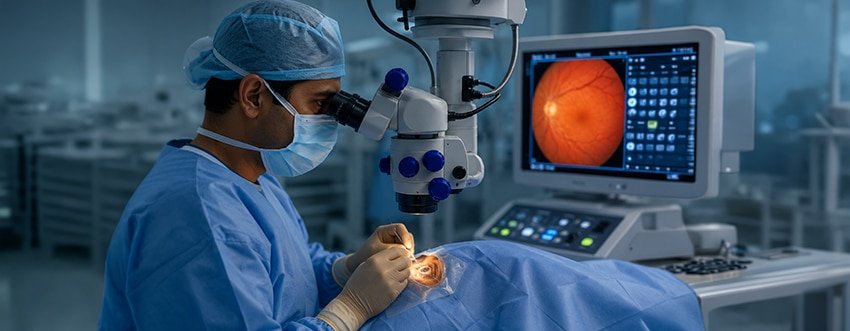
Protecting the delicate layer that helps us see the world in detail.
- Diabetic retinopathy — Diabetes-related damage to retinal blood vessels that may lead to vision loss.

- Retinal detachment — A serious condition where the retina separates from the eye wall and requires urgent care.
- Retinitis pigmentosa — An inherited retinal disorder that gradually affects night and peripheral vision.
- Endophthalmitis — A severe infection inside the eye that can threaten sight if untreated.
- Macular hole — A small opening in the central retina causing distorted or blurred central vision.
- Macular pucker — Formation of scar tissue over the retina leading to visual distortion and blurriness.
- Medical Retina Management — Focused retinal care for conditions that evolve silently over time.
- Age related macular degeneration — Degeneration of the central retina that affects detailed vision and reading.
- Retinal vein occlusion — Blockage of retinal veins causing sudden blurred vision and retinal swelling.
Cataract
Cataract
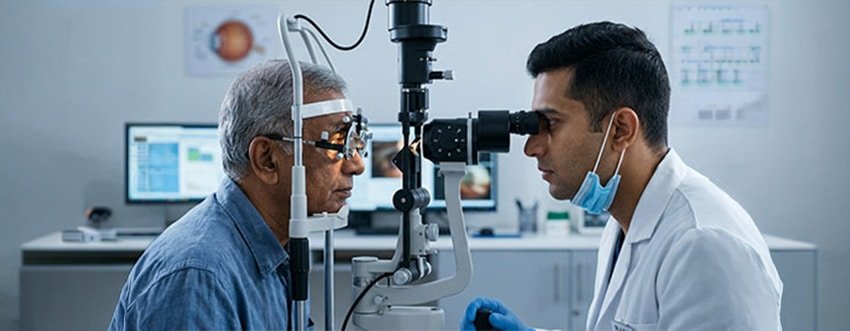
When the world slowly turns cloudy, clarity can still return.
- Age-related and complicated cataracts — Progressive clouding of the eye’s natural lens that affects vision and daily life.
- Advanced phacoemulsification with intraocular lens (IOL) implantation — A modern cataract surgery that replaces the cloudy lens with a clear artificial lens for sharper vision.
Cornea
Cornea
Where clarity begins, and every layer of vision is protected.
- Corneal infections (Keratitis) — Infections of the cornea that can cause pain, redness, light sensitivity, and vision loss if untreated.
- Corneal ulcers — Open sores on the cornea that require prompt treatment to prevent scarring and permanent damage.
- Dry eye disease — A common condition caused by inadequate tear production or poor tear quality, leading to discomfort and irritation.
- Corneal degeneration & dystrophies — Disorders affecting the transparency and structure of the cornea, impacting visual quality.
- Keratoconus — Progressive thinning and bulging of the cornea that causes distorted and blurred vision.
- Corneal transplantation — Advanced surgical procedures to replace damaged corneal tissue and restore sight.
- Pterygium & ocular surface disorders — Growths and surface conditions that may affect comfort, appearance, and vision.
Oculoplasty
Oculoplasty
Eyelid Disorders
- Ptosis — Drooping of the upper eyelid that can obstruct vision or affect appearance
- Ectropion — Outward turning of the eyelid margin, causing irritation and watering
- Entropion — Inward turning of the eyelid, where lashes rub against the eye surface
- Blepharoplasty — Correction of lax eyelids with excess skin folds, for both functional and cosmetic improvement
- Congenital Eyelid Anomalies — Structural eyelid conditions present from birth
Tear Duct Disorders
- Nasolacrimal Duct Blockage — Blocked tear drainage causing persistent watering of the eye
- Dacryocystitis — Infection of the tear sac due to blocked drainage
- Canalicular Lacerations — Repair of torn tear-draining ducts following injury
Orbital Conditions
- Proptosis — Protrusion or bulging of one or both eyes
- Thyroid Eye Disease — Orbital changes associated with thyroid disorders, including proptosis and eyelid retraction
- Orbital Fractures — Fractures of the bones surrounding the eye following trauma
- Idiopathic Orbital Inflammatory Disease (Orbital Pseudotumour) — A non-infectious inflammatory condition of the orbit causing pain, swelling, and proptosis, requiring prompt diagnosis to distinguish it from orbital tumours
- Optic Nerve Sheath Fenestration — Surgical decompression of the optic nerve in cases of raised intracranial pressure (Idiopathic Intracranial Hypertension)
Trauma & Reconstruction
- Eyelid & Orbital Trauma — Comprehensive management of injuries to the eyelids and eye socket
- Eyelid Reconstruction — Rebuilding of eyelid tissue following injury, tumour removal, or burns
- Socket Reconstruction & Prosthetic Eye Fitting — Restoring facial appearance in patients born without an eye (anophthalmos) or following eye removal; includes surgery for contracted sockets
Neuromuscular Conditions
- Hemifacial Spasm & Blepharospasm — Involuntary spasms of the facial or eyelid muscles, treated with Botox or surgery
- Painful Blind Eye — Management and surgical options for eyes that are painful and have lost vision
Cosmetic & Functional Botox
- Botulinum toxin (Botox) injections for blepharospasm, hemifacial spasm, and cosmetic indications including forehead lines and crow’s feet
Ocular Oncology
Ocular Oncology
Adnexal & Surface Tumours
The adnexa refers to the tissues that surround and support the eyeball — including the eyelids, conjunctiva, and orbit. Tumours in these areas are among the most commonly seen in our practice.
- Ocular Surface Squamous Neoplasia (OSSN) — One of the most frequently encountered ocular surface tumours, appearing as a fleshy or gelatinous growth on the conjunctiva or cornea. Highly treatable when detected early, including with topical chemotherapy drops in selected cases
- Sebaceous Gland Carcinoma (SGC) — A malignant tumour arising from the oil glands of the eyelid, often masquerading as a recurrent chalazion. Requires careful surgical excision; known for its tendency to spread
- Basal Cell Carcinoma (BCC) of the Eyelid — The most common malignant eyelid tumour, typically appearing as a painless, pearly nodule on the lower eyelid. Excellent outcomes with complete surgical removal and eyelid reconstruction
- Squamous Cell Carcinoma of the Eyelid — A less common but more aggressive skin cancer of the eyelid requiring prompt treatment
- Malignant Melanoma of the Eyelid — A rare but serious tumour requiring multidisciplinary management
- Tumours of the Lacrimal Drainage System — Uncommon growths arising within the tear duct system
Orbital Tumours
- Orbital Lymphoma — One of the more common orbital tumours in adults, often presenting as a painless, salmon-coloured mass under the conjunctiva or as gradual proptosis. Managed in coordination with a haematologist/oncologist
- Orbital Haemangioma — A benign vascular tumour of the orbit, typically presenting as slowly progressive proptosis. Careful observation or surgical intervention depending on size and symptoms
- Orbital Lymphangioma — A benign but complex vascular malformation of the orbit, prone to sudden enlargement following bleeding
- Orbital Schwannoma — A rare, slow-growing benign tumour arising from nerve sheaths within the orbit
Intraocular Tumours
- Retinoblastoma — The most common intraocular malignancy in children, requiring urgent diagnosis and a coordinated team approach involving oncology, radiology, and surgery to save both life and vision
- Choroidal Melanoma — The most common primary intraocular malignancy in adults, arising from pigment cells within the eye
- Intraocular Lymphoma — A rare but serious condition that can mimic chronic uveitis and requires a high index of suspicion for diagnosis
Comprehensive Eye Checkup
Comprehensive (Complete) Eye Check Up
Because preserving vision begins with seeing the full picture.
- Detailed vision assessment — Accurate evaluation of visual clarity and overall visual performance.
- Spectacle power testing — Precise measurement of refractive errors to determine the correct prescription.
- Eye pressure measurement — Routine assessment as part of a comprehensive eye health evaluation.
- Anterior segment examination — Detailed examination of the front structures of the eye, including the cornea, lens, and iris.
- Dilated retinal examination — Thorough assessment of the retina and internal eye structures.
- Eye muscle and alignment evaluation — Examination of eye coordination, movement, and binocular vision.
- Comprehensive eye health screening — A complete check-up to detect concerns early and maintain long-term visual wellness.
Glaucoma
Glaucoma
A silent threat to vision that demands timely care.
- Comprehensive glaucoma evaluation — Detailed testing to detect pressure-related optic nerve damage early.
- Medical and surgical management — Advanced treatments to control eye pressure and preserve vision.
Uveitis
Uveitis
Treating inflammation within the eye before it affects sight permanently.
- Iridocyclitis — Inflammation of the iris and surrounding tissues causing pain, redness, and light sensitivity.
- Retinitis — Inflammation of the retina that may blur vision and affect retinal health.
- Choroiditis — Inflammation of the vascular layer beneath the retina that can impair vision.
- Pars planitis — A form of intermediate uveitis affecting the middle part of the eye.
- Tuberculous choroiditis — Tuberculosis-related inflammation inside the eye that requires specialized treatment.
Neuro-Ophthalmology
Neuro-Ophthalmology
Where neurological health and vision intersect.
- Headache related to vision — Vision problems and eye strain that may contribute to persistent headaches.
- Papilloedema — Swelling of the optic nerve caused by increased pressure inside the skull.
- Optic atrophy — Damage to the optic nerve resulting in reduced or permanent vision loss.
Common Eye Conditions
Everyday eye concerns deserve expert attention too.
- Dry eye disease — Insufficient lubrication of the eyes causing irritation, burning, and discomfort.
- Allergic and infective conjunctivitis — Redness and irritation of the eye caused by allergies or infections.
- Computer vision syndrome — Digital screen strain leading to tired eyes, headaches,
Systemic Diseases Affecting The Eye
Because overall health often reveals itself through the eyes.
- Diabetes — A systemic condition that can damage retinal blood vessels and affect vision.
- Hypertension — High blood pressure that may impact the retina and optic nerve health.
- Anaemia — Reduced blood oxygen levels that can sometimes affect visual function and eye health.
Drug-Induced Eye Disorders
Monitoring vision when medications affect ocular health.
- Chloroquine maculopathy — Retinal damage caused by prolonged chloroquine medication use.
- Ethambutol-induced optic neuropathy — Vision impairment due to optic nerve toxicity from ethambutol therapy.
Refractive Errors
Refractive Errors
Refractive Errors
Correcting the way light enters the eye to help you see the world clearly.
- Myopia — A common refractive error where distant objects appear blurred while near objects remain clearer.
- Hypermetropia — A refractive error where near objects appear blurred and focusing may require extra effort.
- Astigmatism — An irregularly curved cornea or lens causing blurred or distorted vision at different distances.
- Presbyopia — An age-related loss of near focusing ability that makes reading and close work difficult.
- Anisometropia — A significant difference in refractive power between the two eyes that can affect clear, balanced vision.
- Amblyopia — Reduced vision in one or both eyes caused by abnormal visual development, often beginning in childhood.
- Computer Vision Syndrome — Eye strain, dryness and blurred vision associated with prolonged digital screen use.
- Refractive Surgery Management — Personalised evaluation and treatment options to reduce dependence on glasses or contact lenses.